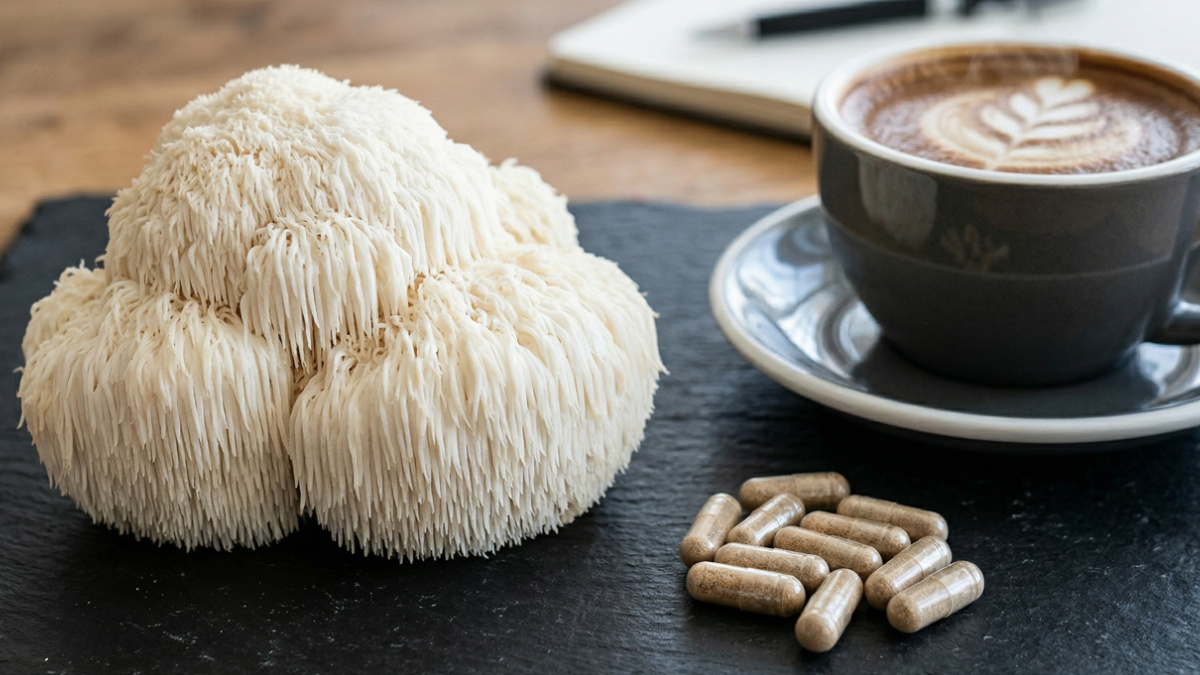
Lion's Mane for Focus: Can a Mushroom Replace Your Nootropic?
If you have ever Googled “lion’s mane vs Adderall for focus,” you are not alone. The search reflects a broader shift: more people are looking for sustained mental clarity without the jitters, crashes, or dependency risks that come with stimulants and synthetic nootropics. Lion’s mane (Hericium erinaceus) keeps surfacing in those conversations, and for good reason — it is one of the few natural compounds with genuine research behind its cognitive effects.
But can a mushroom really stand in for a pharmaceutical? The honest answer is nuanced. In this guide we break down how lion’s mane works at the neurochemical level, what the latest studies actually show, where it falls short compared to prescription nootropics, and which supplements are worth your money.
How Lion’s Mane Works: NGF, Erinacines, and Hericenones
To understand why lion’s mane has earned serious scientific attention, you need to know about three things: nerve growth factor (NGF), hericenones, and erinacines.
NGF is a protein your brain uses to grow, maintain, and repair neurons. It is essential for learning, memory, and the kind of sustained attention most people mean when they say “focus.” As we age, NGF production naturally declines — and with it, cognitive sharpness.
Lion’s mane contains two families of bioactive compounds that influence NGF:
- Hericenones (found primarily in the fruiting body) — these stimulate NGF synthesis in the brain. A foundational 2010 review in Mycology by Ma et al. confirmed that hericenones promote NGF biosynthesis in cultured astrocytes, the support cells that feed and protect neurons.
- Erinacines (found primarily in the mycelium) — these are small enough to cross the blood-brain barrier and directly stimulate NGF production inside the central nervous system. A 2025 review in Frontiers in Pharmacology further clarified the neuroprotective role of erinacines, showing they help protect neurons from oxidative stress and inflammation alongside their neurotrophic activity.
Think of hericenones as the signal that tells your brain to build, and erinacines as the construction crew that can actually get past the gate to do the work. Together, they support what researchers call neuroplasticity — your brain’s ability to form new connections and adapt.
This is fundamentally different from how stimulants work. Caffeine blocks adenosine receptors to keep you feeling alert. Amphetamines flood the brain with dopamine and norepinephrine. Lion’s mane, by contrast, supports the underlying infrastructure of cognition. It does not force a temporary state of alertness — it helps build the neural hardware for clearer thinking over time.
What the Research Actually Shows
The science on lion’s mane and cognition has moved well beyond petri dishes. Here are the studies that matter most.
The 2023 University of Queensland Study (Neurogenesis)
A landmark 2023 study by Martínez-Mármol et al., published in the Journal of Neurochemistry, found that hericerin derivatives from lion’s mane activated a “pan-neurotrophic pathway” in central hippocampal neurons. In plain language: compounds from the mushroom triggered the growth of new neural connections in the hippocampus, the brain region most closely tied to memory and learning.
The researchers identified that these compounds boosted neurite outgrowth — the physical branching of neurons — through a pathway that does not depend solely on NGF receptors. This matters because it suggests lion’s mane may support brain health through multiple mechanisms, not just one.
The 2023 Nutrients Trial (Cognitive Function in Young Adults)
Docherty et al. published a study in Nutrients (2023) examining both acute and chronic effects of lion’s mane supplementation on cognitive function, stress, and mood in healthy young adults. Participants who supplemented with lion’s mane over 28 days showed improvements in processing speed and reported reduced subjective stress compared to placebo.
This is significant because the participants were young, healthy adults — not elderly subjects with existing cognitive decline. It suggests lion’s mane may offer cognitive support even for people whose brains are functioning normally.
The 2025 Frontiers in Nutrition Trial (Acute Cognitive Effects)
A follow-up study by Docherty et al. in Frontiers in Nutrition (2025) looked specifically at the acute effects of a standardised lion’s mane extract on cognition and mood in healthy younger adults. The results confirmed measurable improvements in cognitive performance within hours of a single dose, adding weight to the idea that lion’s mane is not purely a long-term play — there may be short-term benefits as well.
What We Can Conclude
The evidence is encouraging but still developing. Most studies use relatively small sample sizes, and we do not yet have large-scale, long-term clinical trials. What we can say is that lion’s mane has a plausible biological mechanism, consistent positive signals across multiple human trials, and a strong safety profile. That puts it ahead of most over-the-counter nootropics on the market.
Lion’s Mane vs Pharmaceutical Nootropics: An Honest Comparison
This is the section most articles get wrong. They either oversell lion’s mane as a miracle brain pill or dismiss it entirely. The truth sits in the middle.
What Lion’s Mane CAN Do
- Support gradual cognitive improvement. The research consistently points to benefits that build over weeks of daily use — better processing speed, improved memory recall, and enhanced mental clarity.
- Promote nerve health and neuroplasticity. By stimulating NGF and supporting neurite outgrowth, lion’s mane may help maintain long-term brain health, not just short-term performance.
- Reduce stress and support mood. Multiple trials have noted improvements in subjective stress and anxiety scores, which indirectly support focus. It is hard to concentrate when your nervous system is in overdrive.
- Stack safely with other supplements. Lion’s mane has a clean safety profile and pairs well with adaptogens like rhodiola — more on that below — and other functional mushrooms.
What Lion’s Mane CANNOT Do
- Produce immediate, intense focus on demand. If you need to lock in for four hours starting right now, lion’s mane is not the tool for that. Stimulants like caffeine or prescription medications act on neurotransmitter systems in ways that produce rapid, forceful changes in attention. Lion’s mane works on a different timescale.
- Replace prescribed medication for ADHD or other diagnosed conditions. Adderall, Ritalin, and similar medications are prescribed for specific neurological conditions. They target dopamine and norepinephrine pathways in ways that lion’s mane simply does not. If you have been prescribed a medication for focus or attention, lion’s mane is not a substitute.
- Overcome poor sleep, chronic stress, or nutritional deficiencies. No supplement can compensate for a broken foundation. Lion’s mane works best as part of a broader approach to cognitive health — check out our complete wellness stack guide for the full picture.
The bottom line: lion’s mane is best understood as a long-term cognitive support tool, not an on-demand focus drug. For people who want to protect and gradually improve their mental sharpness without pharmaceutical side effects, it is one of the most evidence-backed natural options available. For people with diagnosed attention disorders, it may be a useful complement to treatment — but not a replacement.
What to Look for in a Lion’s Mane Supplement
Not all lion’s mane products are created equal. The difference between a well-made supplement and a cheap one is significant. Here is what matters.
Dual Extraction (Fruiting Body + Mycelium)
Remember those two compound families — hericenones in the fruiting body and erinacines in the mycelium? A supplement that uses only one part of the mushroom is leaving half the bioactive profile on the table. Look for products that specify dual extraction or that combine fruiting body and mycelium-derived compounds.
Some brands use only the fruiting body, which is fine for hericenones but misses the erinacines that cross the blood-brain barrier. Others grow mycelium on grain substrates, which can dilute the active compounds with starch filler. The best products are transparent about their extraction method and source material.
Beta-Glucan Content Disclosed
Beta-glucans are the polysaccharides responsible for many of the immune-supporting and bioactive properties of medicinal mushrooms. A company that discloses its beta-glucan content (typically 20% or higher for a quality extract) is signaling two things: they actually test their product, and the product contains meaningful amounts of active compounds rather than filler.
If the label does not mention beta-glucans at all, treat that as a red flag.
Third-Party Testing
This is non-negotiable. Mushroom supplements should be tested by an independent lab for:
- Identity — confirming it actually contains lion’s mane
- Potency — verifying active compound levels match the label
- Contaminants — screening for heavy metals, pesticides, and microbial contamination
Look for a Certificate of Analysis (COA) available on the brand’s website or by request. Brands that make this easy to find are generally the ones with nothing to hide.
Best Lion’s Mane Supplements Reviewed
We evaluated dozens of lion’s mane products on extraction method, transparency, third-party testing, active compound disclosure, and value. These are the ones we recommend across different formats and budgets.
Best Capsule: Nootrum
Nootrum Lion’s Mane stands out for its focus on cognitive performance specifically. The capsules use a concentrated fruiting body extract standardised to contain both hericenones and beta-glucans, with clear dosage information on the label. Each serving delivers 500 mg of extract, and the brand publishes third-party testing results.
What we like most is the formulation philosophy — Nootrum is designed for the nootropic-minded consumer, not the general wellness crowd. The capsules are easy to dose consistently, and many users report noticeable improvements in mental clarity within the first two to three weeks of daily use.
Best for: People who want a straightforward, well-dosed capsule with a nootropic focus.
Best Powder: FreshCap
FreshCap Thrive 6 and their standalone Lion’s Mane powder have earned a strong reputation for transparency and quality. FreshCap uses 100% fruiting body extract (no grain filler), discloses beta-glucan content clearly on every label, and provides easily accessible third-party test results.
The powder format is versatile — stir it into coffee, blend it into smoothies, or mix it into oatmeal. The taste is mild and slightly earthy, far less intrusive than many mushroom powders on the market.
Best for: People who prefer flexible dosing and want to add lion’s mane to foods or drinks they already consume.
Best Gummy: Om Mushrooms
Om Mushrooms Lion’s Mane Gummies offer a palatable entry point for people who dislike swallowing capsules or dealing with powders. Om uses a blend of fruiting body and mycelium, which means you are getting exposure to both hericenones and erinacines.
The trade-off with any gummy is that you typically get a lower dose per serving compared to capsules or powder, and there are added sugars involved. But Om keeps the formulation relatively clean, and their mushrooms are grown in California under controlled conditions with full traceability.
Best for: Beginners or anyone who wants a low-friction daily habit.
Best in Coffee: Four Sigmatic
If you already drink coffee every morning, Four Sigmatic Think Coffee makes lion’s mane supplementation effortless. Each serving combines organic coffee with lion’s mane and rhodiola extract, which aligns well with the focus-oriented stack we discuss below.
The lion’s mane dose per serving is lower than what you would get from a dedicated supplement, so we consider this more of a maintenance approach than a therapeutic one. But as part of a daily routine — especially if you are also taking a standalone lion’s mane product — it adds a convenient baseline. For a deeper look at the mushroom coffee category, see our full mushroom coffee review.
Best for: Coffee drinkers who want a seamless daily addition without extra pills or powders.
Best Budget: Double Wood
Double Wood Lion’s Mane delivers a solid 1,000 mg per serving at a price point significantly below most competitors. The capsules use a fruiting body extract, and the brand provides third-party testing through an independent lab.
You will not find the same level of detail on beta-glucan standardisation or extraction methods as premium brands, but for the price, Double Wood offers legitimate lion’s mane at an accessible entry point. If you are exploring whether lion’s mane works for you and do not want to commit to a premium product upfront, this is a smart place to start.
Best for: Budget-conscious buyers or anyone testing lion’s mane for the first time.
Stacking Lion’s Mane with Rhodiola for Focus: An AM Protocol
One of the most effective natural focus stacks we have come across pairs lion’s mane with rhodiola rosea, an adaptogen with complementary mechanisms. Here is why the combination works, and how to use it.
Lion’s mane operates on the structural level — supporting NGF, neuroplasticity, and long-term cognitive infrastructure. Rhodiola operates on the functional level — it modulates cortisol, supports dopamine metabolism, and helps you maintain mental performance under stress. One builds the hardware; the other optimises the software.
The Morning Protocol
- Lion’s mane: 500–1,000 mg of a dual-extracted supplement, taken with breakfast.
- Rhodiola rosea: 200–400 mg of a standardised extract (look for 3% rosavins, 1% salidroside), taken on an empty stomach or with a light meal.
- Optional: Pair with your morning coffee or a mushroom coffee blend for an additional layer of support.
Take both in the morning. Rhodiola can be mildly stimulating for some people, so evening dosing is not ideal. Lion’s mane is not stimulating, but morning dosing keeps you consistent.
What to Expect
- Week 1–2: You may notice a subtle reduction in mental fog and improved stress resilience from the rhodiola. Lion’s mane effects typically take longer to manifest.
- Week 3–4: Many users report a noticeable shift in sustained attention and verbal fluency. Tasks that used to require willpower feel slightly easier.
- Month 2+: The compounding effects of daily NGF support become more apparent. This is where lion’s mane really differentiates itself from stimulants — the benefits tend to build rather than diminish over time.
This stack fits naturally into a broader wellness protocol and pairs well with other functional mushrooms.
Medical Disclaimer: The information in this article is for educational purposes only and is not intended as medical advice. Lion’s mane and other supplements are not substitutes for professional medical treatment. If you have a diagnosed condition such as ADHD, depression, or any neurological disorder, consult your healthcare provider before starting or changing any supplement regimen. Do not discontinue prescribed medication based on information in this article.
FAQ
Does lion’s mane actually help with focus?
Yes, but not in the way a stimulant does. Research — including a 2023 trial published in Nutrients and a 2025 study in Frontiers in Nutrition — shows that lion’s mane supplementation can improve processing speed and cognitive performance in healthy adults. The effect is gradual and builds over weeks of consistent use, driven by the mushroom’s ability to stimulate nerve growth factor and support neuroplasticity. Think of it as upgrading your brain’s infrastructure rather than temporarily overclocking it.
Is lion’s mane a replacement for Adderall?
No. Adderall is a prescription amphetamine that directly increases dopamine and norepinephrine activity in the brain. It produces rapid, powerful effects on attention and is FDA-approved for ADHD. Lion’s mane works through entirely different mechanisms — primarily NGF stimulation and neuroprotection — and does not produce the same acute focus-enhancing effects. Some people use lion’s mane as a complementary supplement alongside their prescribed treatment, but this should always be discussed with a healthcare provider. Never stop or replace a prescribed medication with a supplement without medical guidance.
How long does lion’s mane take to work?
Most studies showing cognitive benefits use supplementation periods of four weeks or longer. Some users report subtle improvements in mental clarity within the first one to two weeks, and a 2025 study in Frontiers in Nutrition found measurable acute effects within hours of a single dose. However, the most significant benefits — particularly those related to neuroplasticity and nerve health — appear to compound over months of daily use. Consistency matters more than dose size.
Can you take lion’s mane every day?
Yes. Lion’s mane has been used daily in clinical trials lasting 8 to 16 weeks with no significant adverse effects reported. It has a long history of culinary and medicinal use in East Asian cultures, where it is consumed as a food. Most researchers and practitioners recommend daily use for best results, since the NGF-supporting effects are cumulative. The typical effective dose in studies ranges from 500 mg to 3,000 mg per day of extract, depending on concentration and extraction method. As with any supplement, start at the lower end and adjust based on how you respond.